Top Legal Registrations Every Startup Needs in India (2026 Guide)
Posted By: Admin Published: 16-03-2026

- 1. Why Legal Registrations Are Important for Startups
- 1.1. 1. Legal Protection
- 1.2. 2. Business Credibility
- 1.3. 3. Access to Funding
- 1.4. 4. Tax Benefits
- 1.5. 5. Intellectual Property Protection
- 2. 1. Company Registration
- 3. 2. GST Registration
- 4. 3. Trademark Registration
- 5. 4. MSME / Udyam Registration
- 6. 5. Shop and Establishment Registration
- 7. 6. Professional Tax Registration
- 8. 7. Import Export Code (IEC)
- 9. 8. Startup India Registration
- 10. 9. EPF and ESIC Registration
- 11. 10. Income Tax Registration and Compliance
- 12. Common Legal Mistakes Startups Should Avoid
- 12.1. Ignoring Legal Registrations
- 12.2. Choosing Wrong Business Structure
- 12.3. Not Protecting Intellectual Property
- 12.4. Poor Financial Record Keeping
- 13. How Tripathi & Arora Associates Helps Startups
- 13.1. Complete Startup Registration Services
- 13.2. Legal Compliance Management
- 13.3. Expert Advisory Support
- 13.4. Affordable Professional Services
- 14. Future of Startup Regulations in India
- 15. Conclusion
- 16. FAQ Top Legal Registrations Every Startup Needs in India
- 16.1. Q1. What is startup legal compliance?
- 16.2. Q2. Why is startup legal compliance important in Delhi?
- 16.3. Q3. What is the first legal registration for a startup?
- 16.4. Q4. Is GST registration mandatory for startups?
- 16.5. Q5. What is Startup India registration?
- 16.6. Q6. Do startups need trademark registration?
- 16.7. Q7. What is MSME registration?
- 16.8. Q8. How long does company registration take?
- 16.9. Q9. Do startups need EPF and ESIC registration?
- 16.10. Q10. How can professionals help with startup compliance?
- 17. Other Related Links
Starting a new business in India is exciting, but it also comes with several legal responsibilities. Many startups focus only on product development, marketing, and funding, but legal registrations and compliance are equally important for long-term success. Without proper registrations, startups may face penalties, legal disputes, or difficulties in raising investment.
For entrepreneurs launching businesses in the capital region, understanding startup legal compliance in Delhi is essential. From company registration to GST, trademark protection, and tax registrations, every startup must follow specific legal requirements to operate smoothly.
In this comprehensive guide, we will explore the top legal registrations every startup needs in India, explain their importance, and provide a clear roadmap for entrepreneurs. This article is prepared by Tripathi & Arora Associates, a trusted advisory firm that helps startups manage startup legal compliance in Delhi efficiently.
Why Legal Registrations Are Important for Startups
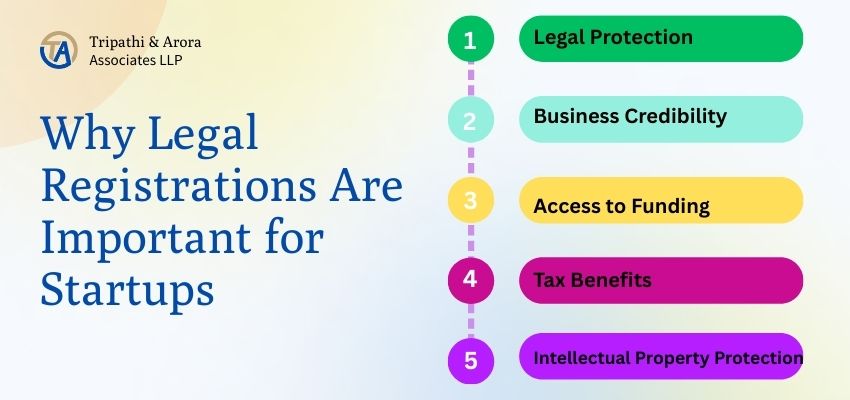
Legal registrations are the foundation of a legitimate and scalable business. Startups that follow proper startup legal compliance in Delhi gain several advantages.
1. Legal Protection
Registrations protect the business owner from legal disputes and penalties.
2. Business Credibility
Customers, investors, and banks prefer working with legally registered startups.
3. Access to Funding
Investors usually invest only in businesses that follow proper startup legal compliance in Delhi.
4. Tax Benefits
Registered startups can claim various tax deductions and government incentives.
5. Intellectual Property Protection
Legal registrations help protect brand identity, technology, and innovative ideas.
Because of these reasons, entrepreneurs should prioritize startup legal compliance in Delhi from the very beginning.
1. Company Registration
The first and most important step for any startup is company registration.
Registering a company provides a legal identity and allows the business to operate officially. In India, startups usually choose one of the following structures:
Private Limited Company
The most popular structure for startups.
Benefits include:
-
Easy fundraising
-
Better credibility
-
Separate legal identity
Limited Liability Partnership (LLP)
Suitable for professional firms and consulting businesses.
One Person Company (OPC)
Ideal for solo entrepreneurs who want corporate structure with limited liability.
Proper company registration is the foundation of startup legal compliance in Delhi.
2. GST Registration
Goods and Services Tax (GST) registration is another essential requirement for startups.
Businesses must apply for GST registration if:
-
Annual turnover exceeds the government threshold
-
They operate in interstate trade
-
They sell goods through e-commerce platforms
GST registration allows startups to:
-
Collect GST from customers
-
Claim input tax credit
-
Operate legally across India
Maintaining GST compliance is a critical part of startup legal compliance in Delhi.
3. Trademark Registration
Your startup’s brand name, logo, and slogan are valuable assets. Trademark registration protects them from misuse.
Benefits of trademark registration include:
-
Exclusive rights to your brand name
-
Protection against brand copying
-
Increased brand value
-
Legal ownership of intellectual property
Many startups ignore trademark protection initially, but it plays a crucial role in startup legal compliance in Delhi and long-term brand protection.
4. MSME / Udyam Registration
MSME (Micro, Small, and Medium Enterprises) registration is highly beneficial for startups.
Through Udyam registration, startups can access:
-
Government subsidies
-
Easier bank loans
-
Tax benefits
-
Priority sector lending
Although MSME registration is not mandatory, it supports startup legal compliance in Delhi and helps businesses grow faster.
5. Shop and Establishment Registration
If your startup operates from a physical office or commercial establishment, you may need Shop and Establishment registration.
This registration regulates:
-
Working hours
-
Employee rights
-
Wages and leave policies
It ensures that businesses follow labor laws and maintain proper startup legal compliance in Delhi.
6. Professional Tax Registration
Professional tax is applicable in certain states and is paid by employees and professionals.
Employers must:
-
Deduct professional tax from employee salaries
-
Deposit it with the state government
Following such regulations ensures proper startup legal compliance in Delhi and helps avoid legal penalties.
7. Import Export Code (IEC)
If your startup plans to engage in international trade, obtaining an Import Export Code (IEC) is mandatory.
Issued by the Directorate General of Foreign Trade (DGFT), IEC allows businesses to:
-
Import goods into India
-
Export products globally
-
Receive international payments
For startups planning global expansion, IEC is an essential part of startup legal compliance in Delhi.
8. Startup India Registration
The Government of India introduced the Startup India initiative to support innovative startups.
Registering under Startup India provides benefits such as:
-
Tax exemptions
-
Self-certification under labor laws
-
Easier access to government funding
-
Intellectual property benefits
Startup India recognition strengthens startup legal compliance in Delhi and increases credibility among investors.
9. EPF and ESIC Registration
If your startup hires employees, you may need to register for employee welfare schemes.
EPF (Employee Provident Fund)
Mandatory if the company employs 20 or more employees.
ESIC (Employee State Insurance)
Applicable to businesses employing 10 or more employees under certain salary limits.
These registrations ensure employee welfare and support startup legal compliance in Delhi.
10. Income Tax Registration and Compliance
All startups must comply with income tax regulations.
Important tax responsibilities include:
-
PAN and TAN registration
-
Filing annual income tax returns
-
Maintaining financial records
-
Paying advance tax when applicable
Following these rules ensures proper startup legal compliance in Delhi and prevents tax penalties.
Common Legal Mistakes Startups Should Avoid
Many startups face legal issues due to avoidable mistakes.
Ignoring Legal Registrations
Delaying registrations can create compliance issues later.
Choosing Wrong Business Structure
Selecting the wrong structure can affect taxation and funding opportunities.
Not Protecting Intellectual Property
Failing to register trademarks or patents can lead to brand disputes.
Poor Financial Record Keeping
Improper bookkeeping may result in tax penalties.
Working with experts like Tripathi & Arora Associates helps startups maintain proper startup legal compliance in Delhi and avoid these problems.
How Tripathi & Arora Associates Helps Startups
Managing legal registrations and compliance can be complex for new entrepreneurs.
Tripathi & Arora Associates provides professional guidance and end-to-end support for startups.
Complete Startup Registration Services
The firm assists with:
-
Company registration
-
GST registration
-
Trademark registration
-
MSME registration
Legal Compliance Management
They help startups maintain ongoing startup legal compliance in Delhi including tax filings and regulatory requirements.
Expert Advisory Support
Startups receive expert guidance on choosing the right business structure and managing legal risks.
Affordable Professional Services
The firm offers cost-effective solutions tailored to startup budgets.

Future of Startup Regulations in India
India is rapidly becoming a global startup hub. Government reforms are continuously simplifying business regulations.
Future improvements may include:
-
Faster online registrations
-
Simplified compliance processes
-
Increased startup funding opportunities
-
Digital regulatory systems
These developments will make startup legal compliance in Delhi even easier for entrepreneurs in the coming years.
Conclusion
Launching a startup requires more than just a great idea. Proper legal registrations and regulatory compliance are essential for building a sustainable and trustworthy business.
From company registration and GST compliance to trademark protection and employee registrations, every startup must follow a structured legal framework. Understanding these requirements helps entrepreneurs avoid penalties and focus on business growth.
With professional guidance from Tripathi & Arora Associates, startups can manage startup legal compliance in Delhi efficiently and ensure their businesses operate legally from day one.
If you are planning to start a new venture, completing the necessary legal registrations today will create a strong foundation for future success.
FAQ Top Legal Registrations Every Startup Needs in India
Q1. What is startup legal compliance?
Startup legal compliance refers to the process of fulfilling legal requirements such as company registration, tax filings, and regulatory approvals.
Q2. Why is startup legal compliance important in Delhi?
Proper startup legal compliance in Delhi helps businesses operate legally, avoid penalties, and build credibility.
Q3. What is the first legal registration for a startup?
Company registration is usually the first and most important step.
Q4. Is GST registration mandatory for startups?
GST registration is required if the business crosses the turnover threshold or sells through e-commerce platforms.
Q5. What is Startup India registration?
It is a government initiative that provides benefits such as tax exemptions and easier funding opportunities.
Q6. Do startups need trademark registration?
Trademark registration protects brand names and logos from misuse.
Q7. What is MSME registration?
MSME registration allows businesses to access government subsidies and financial support.
Q8. How long does company registration take?
Company registration usually takes 7–15 working days.
Q9. Do startups need EPF and ESIC registration?
These registrations are required once the company reaches certain employee thresholds.
Q10. How can professionals help with startup compliance?
Professional firms like Tripathi & Arora Associates assist with registrations, documentation, and legal compliance management.
Other Related Links
- Incorporation Service
- Private Limited Company Registration
- Limited Liability Partnership Company Registration
- One Person Company Registration
- Partnership Company Registration
- Trademark Registration Service
- Income Tax Return Filing Services
- GST Return Filing Services
- FEMA/FDI Services
- Business Registration Solutions
- Accounting And Taxation Services
- Virtual CFO Services
- Secreterial Compliances Services
- Drafting Services


