Understanding the Latest ITR Changes: What You Need to Know for 2025
Posted By: Admin Published: 08-08-2025
- 1. The Importance of Staying Updated
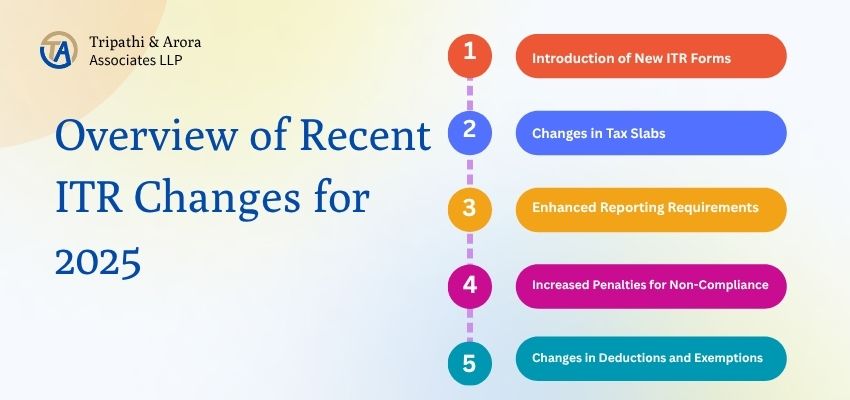
- 2. Overview of Recent ITR Changes for 2025
- 2.1. 1. Introduction of New ITR Forms
- 2.2. 2. Changes in Tax Slabs
- 2.3. 3. Enhanced Reporting Requirements
- 2.4. 4. Increased Penalties for Non-Compliance
- 2.5. 5. Changes in Deductions and Exemptions
- 3. Detailed Analysis of Key Changes
- 3.1. New ITR Forms: What You Need to Know
- 3.2. Tax Slabs for 2025-26: A Comparative View
- 3.3. Enhanced Reporting Requirements
- 3.4. Increased Penalties: What to Expect
- 3.5. Changes in Deductions and Exemptions
- 4. Practical Tips for Filing ITR in 2025
- 4.1. 1. Gather Documentation Early
- 4.2. 2. Choose the Right ITR Form
- 4.3. 3. Stay Informed About Deductions
- 4.4. 4. Use Technology to Your Advantage
- 4.5. 5. Consult a Tax Professional
- 4.6. 6. File on Time
- 4.7. 7. Keep Records for Future Reference
- 5. Conclusion
- 6. Other Related Links
As the Indian financial year progresses, understanding the changes in Income Tax Return (ITR) filing is crucial for individuals and businesses alike. The government frequently updates tax laws and ITR forms to enhance compliance, improve efficiency, and ensure fairness in tax collection. This guide by Tripathi & Arora Associates will delve into the latest changes in ITR for 2025, providing essential insights and practical tips for taxpayers.
The Importance of Staying Updated
Why Taxpayers Need to Be Informed
- Compliance: Understanding the latest ITR changes ensures that taxpayers comply with new regulations, avoiding penalties and legal issues.
- Maximizing Deductions: Changes often include revised deductions or credits that can reduce tax liability, making it essential to be aware of these updates.
- Planning Ahead: Being informed helps taxpayers plan their finances effectively, especially for investments and expenditures that may impact their taxable income.
Overview of Recent ITR Changes for 2025
1. Introduction of New ITR Forms
The Income Tax Department has revised the ITR forms for the assessment year 2025-26. Here are the key changes:- ITR-1: Simplified for individuals with income up to ₹50 lakh from salary, one house property, and other sources.
- ITR-2: Now includes additional disclosure requirements for individuals with income from capital gains and foreign assets.
- ITR-3: Designed for individuals and Hindu Undivided Families (HUFs) having income from business or profession, now requires detailed reporting of income.
2. Changes in Tax Slabs
The government has revised the tax slabs for the financial year 2025-26. Key changes include:- New Tax Regime: The new tax regime continues to offer lower tax rates but with the removal of certain deductions.
- Old Tax Regime: Taxpayers can continue with the old regime, which allows for deductions but at higher rates.
3. Enhanced Reporting Requirements
The Income Tax Department has increased reporting requirements for certain categories of taxpayers:- Foreign Assets: Taxpayers with foreign assets must provide detailed disclosures, including the nature and value of these assets.
- Cryptocurrency Transactions: Taxpayers involved in cryptocurrency transactions must report gains, losses, and investments.
4. Increased Penalties for Non-Compliance
To enforce compliance, the government has introduced stricter penalties for those who do not file their returns accurately or on time. These include:- Late Filing Fees: Increased fees for filing ITR after the due date.
- Penalties for Misreporting: Higher penalties for misreporting income or claiming false deductions.
5. Changes in Deductions and Exemptions
Several deductions and exemptions have been revised, impacting how taxpayers calculate their taxable income:- Section 80C: The limit for deductions under Section 80C remains unchanged, but eligible investments may see new additions or exclusions.
- Health Insurance Premiums: Increased limits for deductions on health insurance premiums for individuals and families.
Detailed Analysis of Key Changes
New ITR Forms: What You Need to Know
ITR-1 Changes
- Eligibility: Individuals with a total income of up to ₹50 lakh can use this form.
- Income Sources: The form now includes a separate section for income from other sources, such as interest and dividends.
ITR-2 Changes
- Additional Disclosure: Taxpayers must disclose all foreign assets and income, including bank accounts and properties.
- Capital Gains Reporting: Enhanced sections for reporting long-term and short-term capital gains have been introduced.
ITR-3 Changes
- Business Income Reporting: More detailed requirements for reporting income from business or profession, including the nature of business and turnover.
- Asset Reporting: Taxpayers must disclose all assets and liabilities, ensuring complete transparency.
Tax Slabs for 2025-26: A Comparative View
| Income Range | Old Regime (Tax Rate) | New Regime (Tax Rate) |
|---|---|---|
| Up to ₹2.5 lakh | Nil | Nil |
| ₹2.5 lakh to ₹5 lakh | 5% | 5% |
| ₹5 lakh to ₹10 lakh | 20% | 10% |
| Above ₹10 lakh | 30% | 30% |
Enhanced Reporting Requirements
Foreign Assets
Taxpayers with foreign assets are now required to provide:- Nature of Assets: Details regarding bank accounts, investments, and properties.
- Valuation: The fair market value of these assets at the time of filing.
Cryptocurrency Transactions
For those involved in crypto trading, it is essential to report:- Transaction Details: Gains and losses from trading, including the date of transaction and amount.
- Investments: Any holdings in cryptocurrencies must be disclosed to ensure compliance.
Increased Penalties: What to Expect
Taxpayers should be aware of the following penalties:- Late Filing Fees: Increased fees for late submissions can go up to ₹10,000 for higher income brackets.
- Misreporting Penalties: Penalties for misreporting can range from 50% to 200% of the tax due on the misreported income.
Changes in Deductions and Exemptions
Section 80C Deductions
While the limit remains at ₹1.5 lakh, eligible investments may see changes:- New Eligible Investment Options: New instruments may be added, providing taxpayers with more opportunities to save on taxes.
- Exclusions: Certain previously eligible investments may no longer qualify.
Health Insurance Premiums
The deduction limit for health insurance premiums has been increased to:- Individuals: Up to ₹50,000 for individuals and their families.
- Senior Citizens: Up to ₹75,000 for senior citizens, providing additional relief.
Practical Tips for Filing ITR in 2025
1. Gather Documentation Early
Start collecting necessary documents such as Form 16, bank statements, and investment proofs well before the filing deadline. This will help streamline the filing process.2. Choose the Right ITR Form
Ensure you select the correct ITR form based on your income sources and eligibility. Consult with a tax professional if unsure.3. Stay Informed About Deductions
Regularly update yourself on the latest deductions and exemptions to maximize your tax savings. Keep track of any changes announced by the government.4. Use Technology to Your Advantage
Consider using tax filing software or platforms that simplify the process and ensure compliance with the latest regulations.5. Consult a Tax Professional
Engage a tax advisor or accountant to assist with complex tax situations, especially if you have multiple sources of income or foreign assets.6. File on Time
Avoid late filing penalties by ensuring you submit your ITR before the deadline. Set reminders for important dates.7. Keep Records for Future Reference
Maintain records of your filed returns and supporting documents for at least six years. This can be helpful in case of an audit.Conclusion
Understanding the latest changes in ITR for 2025 is essential for taxpayers to remain compliant and optimize their tax liability. The revisions in ITR forms, tax slabs, reporting requirements, and deductions highlight the need for careful planning and informed decision-making.At Tripathi & Arora Associates, we are committed to helping you navigate these changes effectively. Our team of tax professionals is here to provide guidance and support, ensuring that you make the most of your tax situation. If you have any questions or need assistance with your ITR filing, don't hesitate to reach out to us. Together, we can ensure that you are well-prepared for the upcoming tax season!
Other Related Links
- Incorporation Service
- Private Limited Company Registration
- Limited Liability Partnership Company Registration
- One Person Company Registration
- Partnership Company Registration
- Trademark Registration Service
- Income Tax Return Filing Services
- GST Return Filing Services
- FEMA/FDI Services
- Business Registration Solutions
- Accounting And Taxation Services
- Virtual CFO Services
- Secreterial Compliances Services
- Drafting Services


